Call - 1 (800) 475-9975
Book Now


Northeast travel disruptions 2025 are redefining what it means to move through the East Coast. What used to be a few rainy-day delays has evolved into a pattern of large-scale transportation challenges that ripple across Connecticut, New York, New Jersey, Massachusetts, and Pennsylvania. From airport cancellations and train suspensions to road closures and coastal flooding, this year’s weather has exposed just how vulnerable the region’s travel network has become.
A string of stronger-than-average nor’easters and erratic storm systems have already hit the corridor this season, forcing governors to declare emergencies, grounding hundreds of flights, and stranding commuters across multiple states. NOAA meteorologists confirm that warmer Atlantic waters and shifting jet-stream patterns are fueling heavier rain, higher winds, and longer-lasting storms, all key ingredients behind the growing list of Northeast travel disruptions 2025.
The impact reaches far beyond weekend vacationers. Business travelers, freight haulers, and daily commuters are facing mounting uncertainty every time a new system forms offshore. Airlines are adjusting schedules weeks in advance; Amtrak is issuing more Service Alerts than usual; and state transportation departments are struggling to keep up with road washouts and fallen-tree closures.
In this report, you’ll find a state-by-state breakdown of current disruptions, verified data from official sources like the National Weather Service and Port Authorities, plus expert tips for navigating safely during this turbulent season. Whether you’re driving through New England’s fall foliage, catching a flight out of JFK, or heading home along I-95, the insights below will help you travel smarter, and stay one step ahead of the next nor’easter.
Storms hitting the Northeast today often resemble mini-cyclones. A key driver: the formation of a nor’easter, a coastal low-pressure system that pulls warm Atlantic air, cold continental air, and strong winds into a potent mix. According to NOAA, “nor’easters are named for the direction from which the strongest winds blow over the northeast states; they can deliver wind, rain and flooding.”
Here are several factors ramping up the magnitude of travel disruption:
In October 2025 one major nor’easter triggered states of emergency in multiple states and registered thousands of cancelled or delayed flights. Because of this, we’re seeing Northeast travel disruptions 2025 as part of a new normal, which means readers and travelers need fresh strategies, and article content must reflect that.
The latest Connecticut storm travel update shows growing risk on both roads and airports. The Housatonic River and Connecticut River basins have reported higher flows due to upstream rainfall, which has triggered localized flooding and road closures.
Highlights and facts:
While many assume coastal zones only suffer, the state of New York faced some of the worst in terms of travel disruption: from NYC travel disruptions in the metro area to Upstate NY storm travel issues in less urban locales.
Key disruption indicators:
New Jersey sees a unique dual pressure: high coastal zones subject to surge, and inland transit corridors that depend on rail and bus systems vulnerable to flooding and power loss.
Reported impacts:
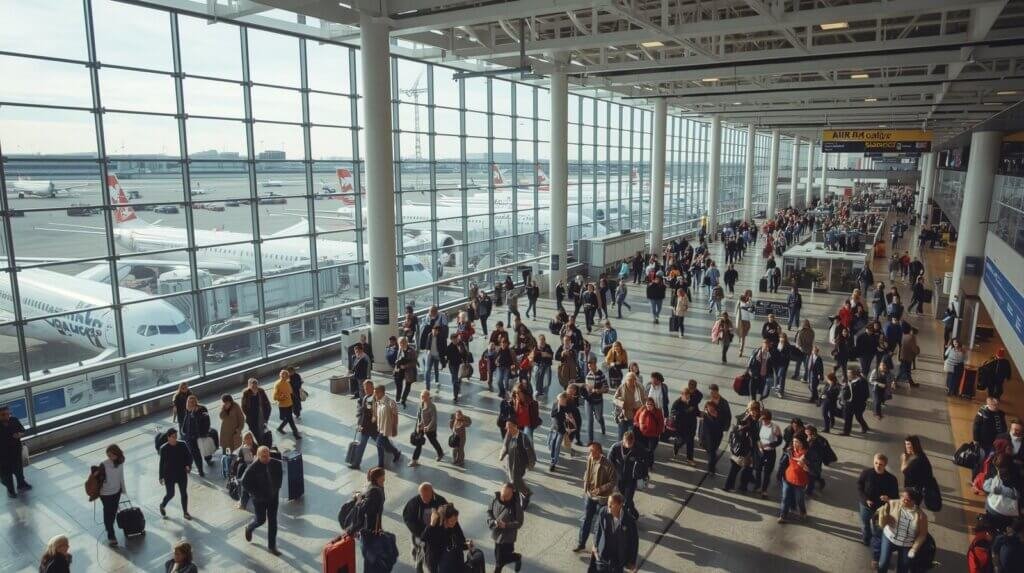
Massachusetts faces the full brunt of storm-surf interactions, combined with major transit hubs like Boston Logan International Airport and ferry routes to islands—making it a critical region for coverage of fall storms New England.
Major data points:
Traveller tip for MA:
• Flying: Book mid-day departures and allow extra layover time for connecting flights.
• Driving: Avoid coastal roads and small bridges during gale warnings.
• Ferries/Islands: Subscribe to operator alerts and consider shifting travel to the following day if high-wind warnings are in place.
Though Pennsylvania is more inland, the ripple effects of storms generate distinct patterns of Pennsylvania travel disruptions, from saturated soil and flash floods to delays at major airports like Philadelphia International Airport.
Snapshot of impacts:
Traveler tip for PA:
• Check 511PA for live road conditions and detour maps.
• At airports: After an alert is issued, assume 60–90 minutes extra time.
• Driving: Don’t assume inland = safe; post-storm flooding and fallen limbs happen fast.
| Metric | Region Affected | Latest Official Signal |
|---|---|---|
| Flight cancellations Oct 2025 | Boston/NYC corridor | 95 flights cancelled, 482 delayed in Boston. |
| State of Emergency declarations | NJ, NY | NJ & NY declared states of emergency during the nor’easter. |
| Wind gusts reported | Connecticut coastline | Gusts up to 50 mph reported, coastal flood advisory in effect. |
| Road washout / closures | East Coast roadways | Multiple causeways closed due to surge-flooding. |
Here are advanced tactics to handle Northeast travel disruptions 2025 like a pro.
Q: Why are Northeast travel disruptions 2025 more frequent?
A: Warmer oceans + stronger jet-streams = more intense nor’easters rather than isolated storms.
Q: What’s the best way to follow live updates?
A: Combine state DOT feeds, airport/rail carrier notifications and a live weather radar app.
Q: Does travel insurance help?
A: Yes — especially if you have “Cancel for Any Reason (CFAR)” or flight/rail change-fee waivers built-in.
Q: What is the safest time to travel during storm season?
A: Mid-morning to early afternoon; avoid late-night or dawn departures due to weather ramp-up and crew/ground delay risk.
Q: Which infrastructure upgrades are underway to reduce future disruptions?
A: Airports like Logan and Bradley are expanding de-icing pads, tracking storm-winds and improving runway drainage to reduce cascade delays.
Northeast travel disruptions 2025 have evolved from one-off storm stories into an ongoing reality for millions across Connecticut, New York, New Jersey, Massachusetts, and Pennsylvania. What used to be the occasional nor’easter delay has become a complex challenge of weather, infrastructure, and timing. Flights don’t just get pushed back, they ripple across entire schedules. Train routes pause, highways close, and travelers find themselves adapting on the fly.
But here’s the truth: preparation is power. The difference between a ruined trip and a manageable detour often comes down to what you do before the forecast turns red. Bookmark your state DOT pages, sign up for airport and Amtrak alerts, and keep a few “Plan B” options ready. Those extra five minutes of planning could save you hours of stress when the storm finally hits.
Don’t underestimate small habits, checking NOAA updates, enabling push notifications, or leaving a few hours early can make the difference between being stranded and staying mobile. Keep flexible bookings, pack a power bank, and know the safest routes around your city or county.
The Northeast’s weather will always be unpredictable, but your response doesn’t have to be. Stay alert, stay adaptable, and travel with intention. Because the best way to beat the next nor’easter isn’t by waiting for blue skies, it’s by being ready long before the clouds roll in.
And remember: in every storm, there’s always a path forward, the smart traveler just knows how to find it.
By Book N Ride
Connecticut & New York Airport Limo Service Experts
Dedicated to providing licensed, insured, and verified transportation for travelers who value comfort, safety, and trust.
📌 Also Read: LIRR strike 2026 transportation


Easy pickup, on time even with my late request, emails answered promptly, and all-around highly professional experience. You will hear from me again!

Erik
Your driver got me to the airport in good time and used experience to avoid traffic jams. Thanks for your help.
David