Call - 1 (800) 475-9975
Book Now


Nashville International Airport (BNA) presents a misleading first impression for arriving travelers. Because the airport operates from a single terminal, many assume that arrival pickups are straightforward. In practice, ground transportation at BNA is governed by arrival release sequencing, curbside enforcement behavior, and shared roadway constraints that are not obvious to passengers until something goes wrong.
In 2026, BNA continues to experience uneven arrival surges tied to airline scheduling density, weekend leisure demand, and special-event traffic in Nashville. These factors directly affect airport pickup reliability. Travelers who plan ground transportation without accounting for how BNA actually processes arrivals often encounter unnecessary wait times, missed driver connections, or repeated curbside loops.
This guide breaks down how arrival pickups function operationally at BNA, with a focus on concourse-level flow, ground transportation zoning, and timing strategies that reduce friction for frequent flyers, families, and business travelers.
Unlike sprawling multi-terminal airports, Nashville International Airport (BNA) isn’t complicated because pickups are far apart—it’s complicated because everyone arrives at once. All concourses feed into the same baggage claim hall, and all ground transportation—rideshares, shuttles, pre-arranged cars—converges on the same curb and roadway.
When flights trickle in, curbside access is smooth. But during arrival banks, especially in the late afternoon and evening, the curb becomes a bottleneck. Enforcement officers prioritize traffic flow over convenience: vehicles without passengers ready to load are quickly asked to move.
The takeaway: success at BNA isn’t about showing up early; it’s about coordinating with actual passenger readiness.
BNA arrival banks aren’t random—they’re scheduled for airline efficiency. Multiple flights often land within a 20–30 minute window, sometimes across multiple concourses. This almost always triggers baggage claim congestion and a rush to the curb.
Once luggage begins rolling, passengers emerge en masse. Vehicles arriving during this surge face:
Delays aren’t unpredictable, they’re the natural result of overlapping arrivals.
Even though all passengers exit through the same terminal, concourse-specific patterns affect pickup timing.
Concourse A: Early Exit, Delayed Bags
Concourse B: High-Volume Congestion
Concourse C: Variable Timing
Concourse D: Short, Dense Bursts
At BNA, baggage delivery is density-dependent, not airline-dependent. Overlapping arrivals slow retrieval, meaning passengers often aren’t ready for pickup when they leave the belt.
Rule of thumb: the most reliable signal for pickup is “bags in hand and outside,” not “at baggage claim.” Calling your driver too early almost guarantees a delay.
BNA actively enforces curb rules, especially during peak periods:
Peak enforcement windows:
This applies to all vehicle types: rideshare, private car, hotel shuttle. Curbside access is transactional, not a waiting game.
| Method | Access Point | Reliability | Best Use Case |
| Rideshare | Designated zone | Moderate during peaks | Solo travelers |
| Pre-arranged car | Arrivals curb | High with coordination | Business, families |
| Hotel shuttle | Shuttle zone | Variable | Overnight stays |
Tips:
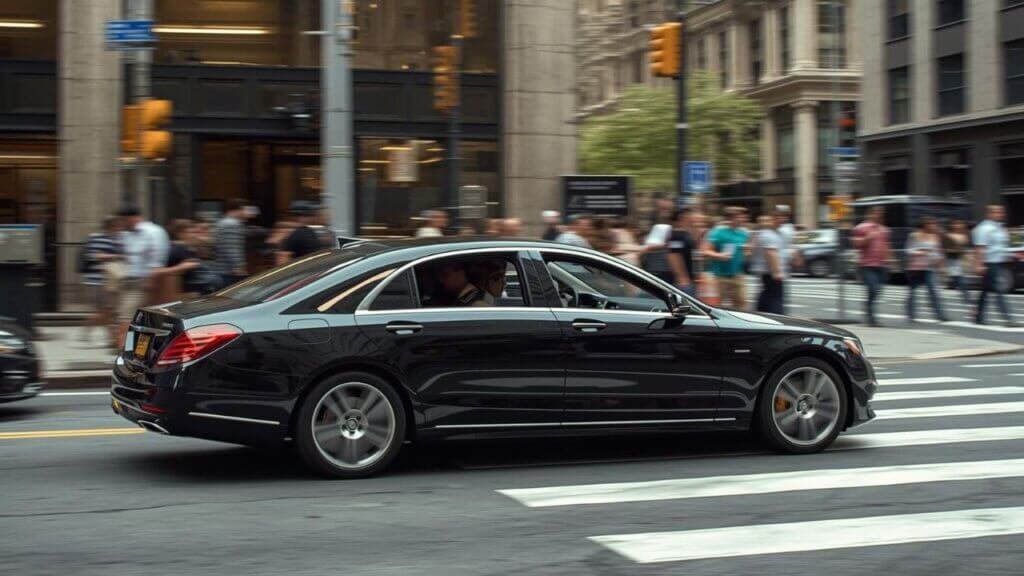
Driver’s Real-World Tip:
“Drivers who enter the arrivals loop before the passenger is outside almost always get displaced during peak windows. The most reliable pickups happen after curbside confirmation, not flight arrival.”
This aligns with consistent enforcement patterns and daily arrival flow observations.
Where do ground transportation pickups happen at BNA?
All ride‑hail (Uber/Lyft) pickups occur at the Ground Transportation Center (GTC) on Level 1 of Terminal Garage 2—not curbside at the terminal exit. Signage inside the terminal directs passengers to this zone.
Where do rideshare vehicles drop off passengers?
Rideshare drop‑offs also occur at the Ground Transportation Center (GTC) rather than directly curbside at Departures. This change was implemented to reduce roadway congestion and streamline traffic flow.
Can drivers wait at the curb for passengers?
No. Curbside waiting or parking is not permitted, drivers must enter the designated waiting area or the GTC and only proceed when the passenger is ready. Curb lanes are for immediate load and go only.
Is there a cell‑phone waiting area for pickups?
Yes. BNA maintains a cell‑phone waiting lot where drivers can park and wait for passengers’ readiness call/text. Once passengers are ready, drivers should head to the designated pickup zone.
Are taxis handled differently than rideshare?
Taxi services typically have a separate queue and pickup point directly outside baggage claim, whereas rideshare pickups are handled through the GTC zones.
Do international arrivals affect pickup timing?
Yes. International passengers may take longer due to customs/CBP processing and baggage retrieval, so drivers should wait for confirmed passenger readiness before entering the curb or GTC lanes.
Is rideshare always faster than other options?
Not necessarily. During peak arrival periods, rideshare pickups can be slower due to staging and designated lane access. Pre‑arranged or professional car services with direct communication often minimize delays.
Are late‑night pickups easier?
Traffic volumes may drop late at night, but rideshare driver availability and formal shuttle schedules can become more variable. Planning and confirmed communication remain key.
Planning arrival transportation at Nashville International Airport in 2026 is primarily a timing exercise, not a routing one. The terminal layout does not meaningfully change pickup outcomes; arrival sequencing does. Travelers who treat BNA like a simple curbside airport usually encounter delays because they initiate pickup steps too early in the arrival process.
The first planning variable is concourse release overlap. At BNA, it is common for two or more concourses to release arriving passengers within a 15–25 minute window during afternoon and evening banks. When this occurs, baggage claim absorbs volume unevenly. Some belts clear quickly, while others stall due to shared usage. This creates staggered passenger readiness, even among flights that land minutes apart. Ground transportation requests placed immediately after landing frequently arrive before the passenger can physically reach the curb.
The second variable is baggage claim exit friction. During peak arrival windows, the path from baggage belt to curb is slowed by pedestrian congestion, elevator queues, and curbside crosswalk backups. These delays are not visible inside the terminal and cannot be inferred from flight schedules. Travelers who plan pickups based on “bags arriving” rather than “bags retrieved and exit path clear” consistently mis-time vehicle arrival.
The third and most restrictive constraint is curbside enforcement behavior. BNA’s arrivals curb operates on active displacement, not passive tolerance. Vehicles that stop without immediate loading are instructed to move, regardless of whether the passenger is seconds away. This enforcement pattern is most aggressive when arrival volume is high, which means the exact periods when travelers are most likely to need flexibility are the periods when flexibility does not exist.
As a result, effective airport transfer planning at BNA follows a specific operational sequence:
Travelers who align airport transfer plans with these constraints avoid repeated curb loops, reduce idle wait time, and exit BNA more predictably. Those who rely on terminal simplicity assumptions encounter delays that appear arbitrary but are, in reality, the direct result of arrival sequencing and enforcement design.
In 2026, successful arrival transportation at Nashville International Airport is not about speed. It is about entering the system at the correct moment.
By Book N Ride
Connecticut & New York Airport Limo Service Experts
Dedicated to providing licensed, insured, and verified transportation for travelers who value comfort, safety, and trust.
📌 Also Read: best way from Houston airport to downtown


My driver was very nice and polite. you can tell he has been a driver for many years.

Logan
Easy pickup, on time even with my late request, emails answered promptly, and all-around highly professional experience. You will hear from me again!
Erik