Call - 1 (800) 475-9975
Book Now


The phrase electric vehicle regulations is no longer just a discussion topic among policymakers. In 2025, regulation is becoming the battleground on which the future of EV adoption, safety, market competition, and industry structure will be decided, especially in the U.S.
As new laws reshape the road ahead, from Congestion Pricing in NYC 2025 to industry-wide safety shifts outlined in our Limo Insurance Guide 2025, the transportation landscape is evolving faster than ever.
These changes are not isolated events. They are part of a broader trend in which safety, supply chain control, competitive positioning, and regulatory alignment will define winners and losers in the EV race.
In this article, we’ll:
Two seismic developments are driving urgency:
China’s GB 38031-2025 battery safety regulation, effective July 1, 2026, which bans fire or explosion as permissible outcomes under defined test conditions.
The termination of the U.S. federal EV tax credit, for many buyers, on September 30, 2025.
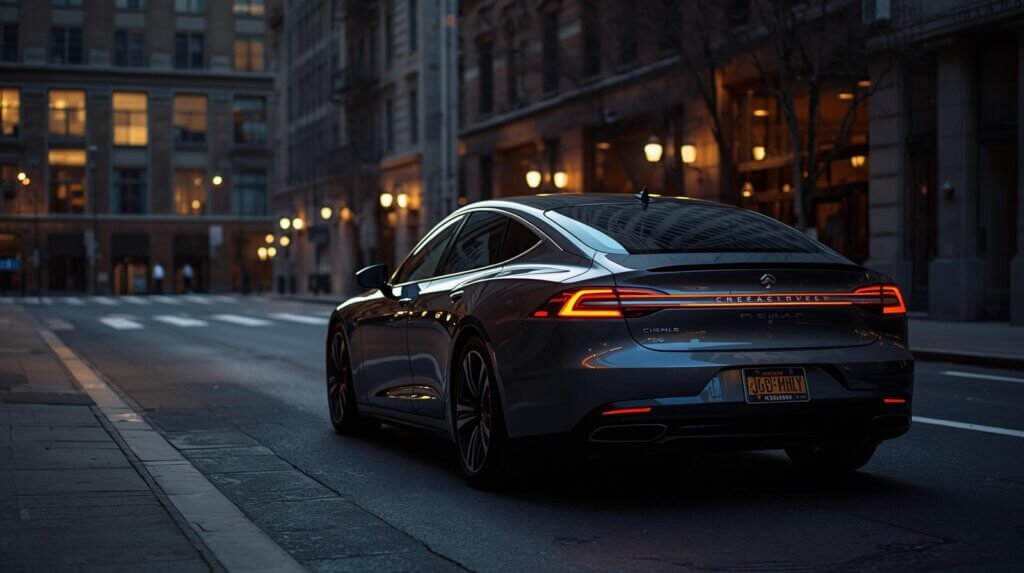
The regulation is titled “Safety Requirements for Power Batteries Used in Electric Vehicles (GB 38031-2025)”. It replaces the earlier standard (from 2020) and brings stricter, outcome-based requirements.
Key features:
| Feature | What It Requires / Changes | Significance |
|---|---|---|
| No Fire, No Explosion Rule | Battery packs must endure specified stress (thermal, mechanical, short circuit, overcharge) without igniting or exploding. | This is a stricter standard than prior versions, which often permitted smoke, venting, or warnings. |
| Thermal Diffusion / Propagation Tests | Tests to see whether a failure in one cell propagates to adjacent modules. | Prevents cascade failure, a major cause of battery fires. |
| Crash / Impact Resistance | Tests simulating under-body hits, crush, vibration, and drop conditions. Battery packs must not breach safety thresholds. | This ensures battery structural integrity under collision. |
| Fast-Charge / Cycle Durability | Battery must be tested after repeated fast-charging cycles and under strain (overcharge, extreme temperature) without catastrophic failure. | With fast charging becoming common, resilience is critical. |
| Smoke, Toxic Gas, Fire Exposure Limits | Even if some smoke is allowed under controlled conditions, it must not penetrate the passenger compartment or jeopardize occupant safety. | Strict compartment integrity and material safety. |
Because of the stricter outcome orientation (rather than just warning systems), many battery makers and automakers will need to redesign modules, thermal control systems, packaging, and battery management software/hardware.
Industry analysts have noted that GB 38031 sets China among the world’s most ambitious safety regimes for EV batteries.
Under IRS rules (Section 30D), the Clean Vehicle Credit has allowed buyers up to $7,500 for qualifying new EVs acquired by September 30, 2025.
Key rules:
As of October 1, 2025, most EVs no longer qualify for the credit.
It’s unlikely that U.S. regulators will adopt China’s battery safety rules wholesale. But the trend toward convergent safety expectations is real.
Companies selling globally may need to design to the highest standard to avoid fragmentation (e.g. multiple battery versions for China, U.S., EU).
Insurance, liability, and consumer expectation may push U.S. regulators to tighten oversight (e.g. battery certification, failure reporting).
Battery/cell producers will invest to comply with China’s standard, raising manufacturing costs. U.S. automakers heavily dependent on those suppliers may see cost increases or delays in compliance.
Some manufacturers may diversify sourcing away from China to mitigate policy risk.
Marketing claims like “China-grade battery safety” or “global safety compliant EV” become powerful differentiators in a crowded EV market.
Public perception may increasingly demand not just zero emissions, but zero-fire risk and full safety transparencies.
Let’s project what might happen over time, under different regulatory and market dynamics.
| Scenario | Key Drivers | Likely Outcomes | Risks / Wildcards |
|---|---|---|---|
| Stabilization Around State Incentives | Federal credit gone, states step up incentives | EV growth slows but persists, regional disparity in EV markets | Some states lack capacity or political will |
| Safety Regulation Catch-Up | U.S. regulators adopt new battery safety mandates | Automakers move to unify global safety designs, increased development cost | Delays in rulemaking, industry pushback |
| Demand Pullback | Combined credit removal + higher costs depress demand | Inventory pileups, price wars, OEM margin squeeze | Rapid technology improvements may offset |
| Convergence & Premium Differentiation | Safety becomes a brand differentiator | Compliant EVs garner premium, noncompliant struggle | Retrofitting costs high, regulatory misalignment hurts |
| Technology Disruption | Rapid adoption of safer battery chemistries (e.g. solid-state) | Earlier compliance becomes legacy, shift to new architectures | Long development lead times, supply constraints |
In September 2024, BYD recalled ~96,714 Dolphin and Yuan Plus vehicles over fire risk associated with electric power steering components. Insulation pads were installed to reduce risk.
This recall underscores how ancillary systems, not just battery cells, can trigger fire risk, and why integrated safety design is critical.
Following political backlash, Ford and GM abandoned plans to extend the federal EV tax credit via internal lease / inventory tricks, illustrating how regulatory and public perception constraints override tactical market moves.
Battery tech media reported that many battery firms expect increased R&D for thermal control, fire suppression, module architecture changes, and more expensive materials (e.g. non-flammable separators).
Here’s a practical roadmap for U.S. industry players (OEMs, fleets, importers) to respond:
Q1. Will U.S. regulators adopt China’s battery safety rules someday?
It’s unlikely that U.S. law will copy China’s regulations verbatim. However, the growing global focus on electric vehicle regulations and safety testing could push U.S. agencies such as the NHTSA and EPA to adopt stricter standards. As electric vehicle regulations evolve, the U.S. may align partially with international norms to maintain safety credibility and competitive parity.
Q2. Can automakers avoid the increased cost by segmenting models?
Yes, theoretically. Automakers could create higher-end “compliance” models for regulated markets and lower-cost versions for domestic sale. Yet with electric vehicle regulations tightening worldwide, maintaining multiple compliance paths can increase complexity, hurt brand consistency, and reduce economies of scale. Most OEMs will likely choose a unified safety and compliance design.
Q3. How much extra will compliance cost per vehicle?
Industry analysts estimate a 2–5 % cost increase per vehicle for meeting new testing, materials, and design requirements under current and emerging electric vehicle regulations. Over time, innovation in safer battery chemistries and manufacturing efficiency should bring that premium down.
Q4. Should U.S. fleets retrofit existing EVs now?
It depends on utilization and risk exposure. High-mileage fleets or premium services may benefit from early retrofits that meet new safety requirements under future electric vehicle regulations. For older or limited-use vehicles, a cost-benefit analysis may show that waiting for natural fleet turnover makes more sense.
Q5. What battery chemistries may “win” under stricter regulations?
Safer chemistries, solid-state, lithium-metal with non-flammable electrolyte, or designs with advanced separators and thermal controls, are better suited for compliance with evolving electric vehicle regulations. These technologies can deliver safety gains without heavy structural reinforcement.
Q6. What happens to used EVs in the U.S. now that the federal credit is gone?
With the end of the federal EV tax credit, used EV values may soften. Dealers and fleet operators should adjust trade-in programs, warranties, and pricing strategies to maintain stability. As new electric vehicle regulations shape safety and reporting standards, transparent certification could become a value-boosting factor for used models.
The evolution of electric vehicle regulations from incentive-heavy models to safety-first mandates marks a turning point. China’s battery safety regulation is rewriting expectations globally, and the U.S. response to the end of EV credits will test industry resilience.
For OEMs, fleets, and mobility operators in the U.S., this is a moment for strategic foresight, not reaction. Prepare your supply chain, redesign battery systems, secure certifications, and adopt safety as a core brand value. The future of zero-emissions mobility is not just about cleaner energy, it’s about safer energy.
By Book N Ride
Connecticut & New York Airport Limo Service Experts
Dedicated to providing licensed, insured, and verified transportation for travelers who value comfort, safety, and trust.
📌 Also Read: limo insurance and EV regulations NYC NJ


My driver was very nice and polite. you can tell he has been a driver for many years.

Logan
Easy pickup, on time even with my late request, emails answered promptly, and all-around highly professional experience. You will hear from me again!
Erik